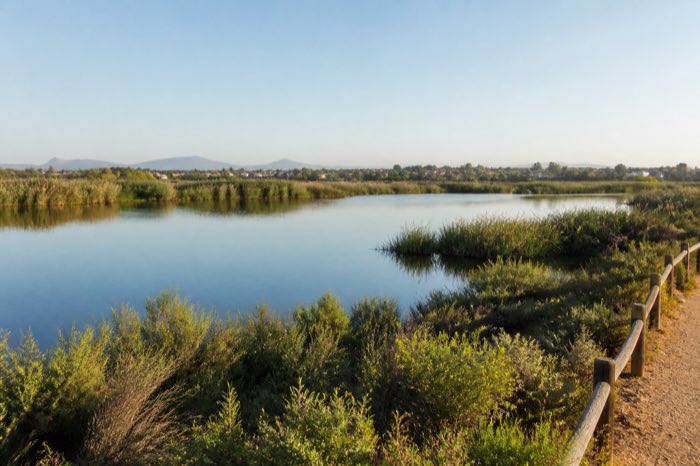
A quiet freshwater wetland at Rondevlei Nature Reserve on the Cape Flats

Spend A Morning At Rondevlei Nature Reserve On The Cape Flats

If you are spending time on the Cape Flats and want a quiet break from roads, shops and the usual rush of Cape Town, Rondevlei Nature Reserve is well worth putting on your list. It sits near Grassy Park as part of the wider False Bay Nature Reserve, and it gives visitors that slightly surprising Cape Town feeling: you are still in the city, but the reeds, water and birds make it feel as though you have stepped into a much slower place.

A quiet freshwater wetland at Rondevlei Nature Reserve on the Cape Flats

This is one of those places that rewards people who are happy to look properly. At first glance you see a stretch of water and a thick edge of reeds. Then the reserve starts to reveal itself. A bird moves low over the vlei. Something rustles in the vegetation. The wind shifts across the water, and suddenly you understand why wetlands matter so much in this part of the city.

A Wetland With Real Character

Rondevlei is known for its birdlife, and that is usually the first reason people visit. The reserve has long been a favourite with birdwatchers because the wetland habitat attracts many different waterbirds and smaller reed-loving species. Cape Town Tourism notes that Rondevlei is home to more than 230 bird species, and the Cape Bird Club describes it as a good place for a few hours of birding close to the city.

You do not have to be a serious birder to enjoy it. In fact, part of the charm is that beginners can still have a rewarding visit. Bring a pair of binoculars if you have one, walk slowly, and spend a bit of time at the hides. Coots, ducks, weavers, kingfishers and other wetland birds can turn a short stop into a proper little outing. If you are patient, the reserve does the work for you.

Bird Hides, Boardwalks And A Slower Pace

One of the best ways to enjoy Rondevlei is to move from hide to hide and let the place settle around you. The bird hides are useful because they allow visitors to watch the water without disturbing everything that lives there. Sit quietly for a few minutes and the wetland becomes busier than it first appeared.
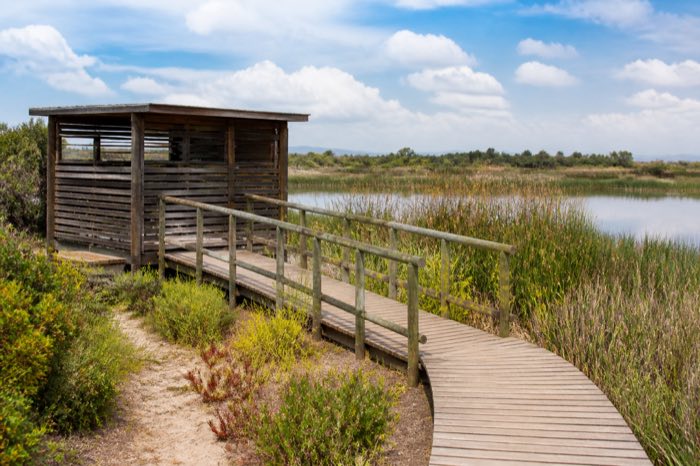
A wooden bird hide and boardwalk beside reeds at Rondevlei Nature Reserve

The paths and viewing spots make the reserve easy to explore without needing a full-day hike. That makes it a good choice for families, visitors with limited time, or anyone who wants a nature stop that does not require complicated planning. It is also a fine place for photography. The combination of reeds, open water and birds gives you plenty to work with, especially in the softer light of the morning or late afternoon.

Yes, There Are Hippos

Rondevlei is also famous because it is one of the few places in Cape Town where hippos live. They are not something to expect on command, and they are often hard to see, but knowing they are part of the wetland adds a little excitement to the visit. The better approach is not to arrive with a checklist that must be completed. Go for the wetland itself, and treat any special sighting as a bonus.

That is really the right way to experience most nature reserves on the Cape Flats. These places are not always loud or showy. Their value is in the details: a bird call from the reeds, a small movement in the water, flowers holding on in sandy soil, or the simple fact that a protected wetland still survives inside a busy urban area.

Why Rondevlei Matters

The Cape Flats has a rich natural history, but much of its original vegetation and wetland habitat has been pushed back by development over time. Rondevlei helps protect a piece of that older landscape. It forms part of the False Bay Nature Reserve, which has been recognised for the importance of its wetlands, birds and biodiversity.

That matters for wildlife, but it also matters for people. A place like Rondevlei gives nearby communities, students, families and visitors somewhere to learn about the natural side of the Cape Flats. It reminds us that this part of Cape Town is not only about struggle, settlement and history. It is also about water, plants, birds and open space.
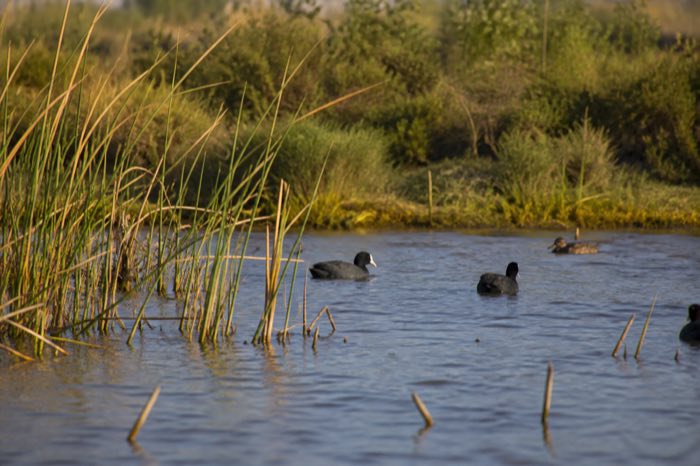
Waterbirds moving through reeds at a Cape Flats wetland reserve

Making The Most Of A Visit

If you are planning to go, keep the outing simple. Comfortable shoes, water, a hat and binoculars will make the visit easier. A camera is useful too, but do not spend the whole time looking through a screen. Some of the best moments at Rondevlei are the quiet ones that happen while you are simply standing still.

It is also sensible to check the current opening times and visitor details before setting off, as reserve arrangements can change. The City of Cape Town and local birding groups are good starting points for practical information. Once you are there, give yourself enough time to slow down. Rondevlei is not a place to rush through just to say you have been.

For anyone touring the Cape Flats, Rondevlei adds something important to the journey. It shows a softer, wilder side of the area and gives visitors a chance to see why these urban nature reserves are worth protecting. Spend a morning there, listen carefully, and you may leave with a different picture of the Cape Flats than the one you arrived with.

Touring The Cape Flats, South Africa – Some Unmissable Attractions

The Cape Flats is an area of Cape Town in South Africa that is filled to the brim with history. It is where much of the battle against the ills of Apartheid was fought. Today that battle is largely over, a new South Africa has been born. However, the Cape Flats remains one of the most fascinating places for the visitor to the country to explore. Here are 8 must-visit attractions for those who want to delve into what makes not only the Cape Province what it is today – but what makes Cape Town a global tourism hotspot.

1. Visit Gugulethu.

The township of Gugulethu is a place where anti-Apartheid activists were responsible for bringing down the racist government of South Africa. A visit will reveal how much of a pivotal role these activists played in that process. However – it offers the visitor much more. It offers an insight into the everyday struggles that those who still call townships home. There is also a sense of joy and laughter in the townships. Those choosing to explore this particular township can expect to enjoy transport in minibus taxis which millions use to commute. There is the opportunity to experience local cuisine and consult with a traditional healer. It is a trip filled with wonder and admiration for the indomitable spirit of the Cape Flats.

2. Enjoy a Meal.

Visiting a local eaterie gives an insight into just why the Cape Flats is such a special place. A meal at one of these spots is the perfect way to really get to know the locals – and enjoy a wonderful meal at the same time. Mzoli’s in Gugulethu is the perfectly simple antidote for the usual tourist experience. Enjoy a local brew, buy your protein of choice from the butchery and have it prepared. then settle back to take in what makes this location so special.

3. The Wolfgat Nature Reserve.

It’s not all bricks and mortar on the Cape Flats – the area also has some natural wonders that simply should not be missed by those with an interest in flora and fauna. The reserve which covers an area of 248 hectares was established in 1986 – and it boasts a coastline with stunning views over the vista of False Bay. It is the perfect place to settle down with a picnic basket and take in the magnificence of a truly beautiful place.

4. Get to know a Township.

For those with an interest in the spiritual a gospel style tour of Langa or Kayamandi townships. Experience choirs that list their voices in prayer – and the hospitality of the locals. Take in the vibrancy of dance and the refreshment of homemade goods. Visit the local churches where preaching against the evils of Apratheai provided spiritual solace to township residents faced with almost insurmountable odds.

5. Visit the local market.

The township of is still characterized by poverty, but there is a richness of art and craft that can be found in its environs. One of these places is in the Khayelitsha market. This is the perfect place for visitors to pick up curios, local arts and much more. Not only will the visitor be celebrating artistic and creative talent – they will be contributing to lifting many out of poverty.

6. Do some shopping.

Liberty Promenade in Mitchells Plain is a concrete sign that the Cape Flats is undergoing a Renaissance. This ultra-modern shopping center offers a variety of retail and entertainment options to the visitor. Fashion items are available in abundance and opportunities to enjoy local cuisine abound. Visitors can take advantage of the favorable exchange rate and pick up that special keepsake, reminding them of their visit to this fascinating area.

7. Take a Cooking Course.

The Cape Flats is renowned for the production of dishes that are uniquely South African. Visitors are offered the opportunity to learn more not only about that cuisine – but what makes the people of the area so special. Food can bring us all closer together – and provides a lasting gift to those who simply want to hone their cooking skills. One of the best cooking schools is hosted by the Eziko Cooking and Catering School. Established in Langa township to provide a helping hand to the unemployed, it today offers the curious an opportunity to not only make a difference to the lives of township residents – but to simply have some fun.

8. Relax on a beach.

Monwabisi beach, adjacent to Khayelitsha offers sweeping views of False Bay. It is the perfect place for that picnic or barbecue (known as a ‘braai’ in South Africa). The visitor will meet local residents – and enjoy their insight into what makes the Cape Flats tick. Take a dip in the tidal pool and simply enjoy the sunshine and the company.

The Cape Flats is a fascinating destination for those who want to learn more about South Africa and its history – and how the journey towards the Rainbow Nation continues.

Visit The Cape Flats Nature Reserve At The University Of Western Cape

It’s time for a trip to the University of Western Cape. You’re going to see wildlife that you’ve never encountered, endangered plant species and three different ecosystems. That’s right, all of this can be found on a privately-owned reserve on a college campus in South Africa. Are you ready for this adventure?

The three ecosystems consist of flatlands, wetlands and dunes. Whether you are a botanist or just have an appreciation for plants like I do, you’re going to discover that between the three ecosystems, there are 220 plant species. One of the plants that is endangered is the Lessertia Argentea, and it is a red list species.

As for the wildlife, there are 20 mammal species and more than 100 bird species. It is the perfect habitat for bird watching. Have you ever seen a spotted eagle owl? What about a rock kestrel? There are also black-shouldered kites on site at the Cape Flats Nature Reserve.

You would think as of right now that this reserve would be forested and rural, but that is not the case. It is an urban nature reserve, right on campus. While that is really neat, there is a downside. In that sense, the reserve isn’t so much protected from nearby development. Plus, not all of the vegetation is in protected areas, which of course affects the wildlife as well.

In fact, there has been a movement to try and keep it more protected, but the numbers are sliding. Still, this nature reserve, conceived in the 1960’s and made official in 1977, makes up 25 percent of the University of Western Cape.

It didn’t take long after Cape Flats Nature Reserve became official for it to be recognized as a national monument. Are you getting excited about visiting this Provincial Heritage Site? If you look at the reserve’s origins, the goal was to protect two particular endangered plant species.

That said, you’re going to want to check out these two particular species while you are there. They are the Coastal Fynbos and the Strandveld. Much environmental research is conducted at the reserve, and it is also used for educational purposes and ecological testing.

There is no other land area on the globe that boasts that boasts more endangered plants per unit area. You can see why people are fighting to protect this core conservation site. It is truly a remarkable place to visit, whether for professional reasons or simply as a tourist who cares about environmental preservation and seeing species of plants and animals you don’t see everywhere.

We have talked plants, mammals and birds so far, but what about reptiles? There is the Cape Dwarf Chameleon, and it would be a treat to see that creature roaming around. You might even end up spotting an Angulate Tortoise.

There are weekly photo walks, and you will see all the short trails that intertwine. There are picnic areas for your enjoyment, and you can even take a guided tour. Check out pictures of the university campus and the nature reserve. You’re going to take in some history here folks, and you’re going to learn while having a lot of fun out there in nature.

You’re out in the wild, but in an urban area at the same time. Not many campuses can boast that type of atmosphere. And in fact, there isn’t a place like Cape Flats Nature Reserve anywhere in the world. You’re in for quite the treat when you make the trek there and do some exploring. Who knows what all you will find, but you certainly have a list of creatures and plants to look out for.